While the pandemic is not over, we do have some good news. There are vaccines and they will be available soon. Here’s where we are in terms of an overall plan and where states are with distributing the vaccines.
Operation Warp Speed
The current administration has already purchased hundreds of millions of doses of several vaccine candidates. Two of them are from Moderna and Pfizer and they’ve shown significant efficacy in Phase 3 clinical trials. The incoming Biden administration will take on distribution and has established a COVID-19 Task Force. A limited number of doses may become available as early as December.
This document from the Center for Disease Control and Prevention (CDC) is the roadmap for state, territorial, tribal, and local public health programs and their partners. It focuses on how to plan and operationalize a vaccine response to the pandemic within their jurisdictions. It’s quite comprehensive and is a good reference for the coming months.
Phased Approach
In the Interim Playbook, the CDC has given states a set of planning assumptions by which they can develop their distribution plans and explains how the vaccine will likely be administered in phases.
Phase 1 – there is an initial limited supply of vaccine doses that will be prioritized for certain groups. The distribution will be more tightly controlled and a limited number of providers will be administering the vaccine.
Phase 2 – supply would increase and access will be expanded to include a broader set of the population, with more providers involved.
Phase 3 – there would likely be sufficient supply to meet demand and distribution would be integrated into routine vaccination programs.
Common Themes and Concerns from State Plans
The Kaiser Family Foundation (KFF), a non-profit organization focusing on national health issues, sought to collect plans from all 50 states and DC. As of Nov. 13, they’ve reviewed 47 of these plans and have singled out key areas contained within each plan.
Identifying priority populations for vaccination. Each state will determine who will be first in line, initially; however, every plan highlights the following categories as being the priority during Phase 1: healthcare workers, essential workers, and those at high risk (older people and those with pre-disposing health risk factors). A majority of states (25 of 47, or 53 percent) have at least one mention of incorporating racial and/or ethnic minorities or health equity considerations in their targeting of priority populations.
Identifying the network of providers in their state will be responsible for administering vaccines. Even though states are at different points in the process, providers will likely include hospitals and doctors’ offices, pharmacies, health departments, federally qualified health centers, and other clinics that play a role in administering vaccines today. Given the need to quickly vaccinate most residents, additional partners will be needed, such as long-term care facilities, and will (potentially) set up public locations like schools and community centers for mass vaccinations.
Developing the data collection and reporting systems needed to track the vaccine distribution progress. Many states are relying on (and often expanding) existing state-level immunization registries, while other states are developing new systems or using those provided by the federal government. To sum it up, each state is at a different stage in this process.
Laying out a communications strategy for the period before and during vaccination. The CDC has asked states to design plans that anticipate and respond to different populations and include the need to address misinformation and vaccine hesitancy. Not surprisingly, some of these states’ plans are detailed while some are not.
All of these things are high-level summations of what is planned so far. For a more detailed explanation, check out the Interim Playbook from the CDC. The COVID-19 situation is ever-changing, but the most important takeaway is that steps are being put in place to help protect us all. Stay safe.
“Copy as Website Link” gives you ready-to-paste HTML for a web page. “Copy Link” copies the plain address for social media, email, or chat.
McSwain & Company, PS
COVID-19 Vaccine Rollout: Where We Are So Far
December 1, 2020 · Blog, Tip of the Month, Uncategorized
⏱ 5 min read
While the pandemic is not over, we do have some good news. There are vaccines and they will be available soon. Here’s where we are in terms of an overall plan and where states are with distributing the vaccines.
Operation Warp Speed
The current administration has already purchased hundreds of millions of doses of several vaccine candidates. Two of them are from Moderna and Pfizer and they’ve shown significant efficacy in Phase 3 clinical trials. The incoming Biden administration will take on distribution and has established a COVID-19 Task Force. A limited number of doses may become available as early as December.
This document from the Center for Disease Control and Prevention (CDC) is the roadmap for state, territorial, tribal, and local public health programs and their partners. It focuses on how to plan and operationalize a vaccine response to the pandemic within their jurisdictions. It’s quite comprehensive and is a good reference for the coming months.
Phased Approach
In the Interim Playbook, the CDC has given states a set of planning assumptions by which they can develop their distribution plans and explains how the vaccine will likely be administered in phases.
Phase 1 – there is an initial limited supply of vaccine doses that will be prioritized for certain groups. The distribution will be more tightly controlled and a limited number of providers will be administering the vaccine.
Phase 2 – supply would increase and access will be expanded to include a broader set of the population, with more providers involved.
Phase 3 – there would likely be sufficient supply to meet demand and distribution would be integrated into routine vaccination programs.
Common Themes and Concerns from State Plans
The Kaiser Family Foundation (KFF), a non-profit organization focusing on national health issues, sought to collect plans from all 50 states and DC. As of Nov. 13, they’ve reviewed 47 of these plans and have singled out key areas contained within each plan.
Identifying priority populations for vaccination. Each state will determine who will be first in line, initially; however, every plan highlights the following categories as being the priority during Phase 1: healthcare workers, essential workers, and those at high risk (older people and those with pre-disposing health risk factors). A majority of states (25 of 47, or 53 percent) have at least one mention of incorporating racial and/or ethnic minorities or health equity considerations in their targeting of priority populations.
Identifying the network of providers in their state will be responsible for administering vaccines. Even though states are at different points in the process, providers will likely include hospitals and doctors’ offices, pharmacies, health departments, federally qualified health centers, and other clinics that play a role in administering vaccines today. Given the need to quickly vaccinate most residents, additional partners will be needed, such as long-term care facilities, and will (potentially) set up public locations like schools and community centers for mass vaccinations.
Developing the data collection and reporting systems needed to track the vaccine distribution progress. Many states are relying on (and often expanding) existing state-level immunization registries, while other states are developing new systems or using those provided by the federal government. To sum it up, each state is at a different stage in this process.
Laying out a communications strategy for the period before and during vaccination. The CDC has asked states to design plans that anticipate and respond to different populations and include the need to address misinformation and vaccine hesitancy. Not surprisingly, some of these states’ plans are detailed while some are not.
All of these things are high-level summations of what is planned so far. For a more detailed explanation, check out the Interim Playbook from the CDC. The COVID-19 situation is ever-changing, but the most important takeaway is that steps are being put in place to help protect us all. Stay safe.
“Copy as Website Link” gives you ready-to-paste HTML for a web page. “Copy Link” copies the plain address for social media, email, or chat.
Disclaimer
These articles provide general information on tax, accounting, and financial topics for small businesses and individuals. They are educational in nature and are not specific legal, accounting, financial, tax, or other professional advice, and should not be relied upon as such. This content was prepared by Service2Client and may have been reviewed or edited by the website owner for accuracy and compliance. Look for a trust mark below for verification details. No representation is made that any approach described will achieve a particular result, and no regulatory or professional body has reviewed or endorsed this content. Because each situation is different, readers should consult a qualified professional about their specific circumstances before acting. Images accompanying these articles are protected by copyright and may not be copied or reused.

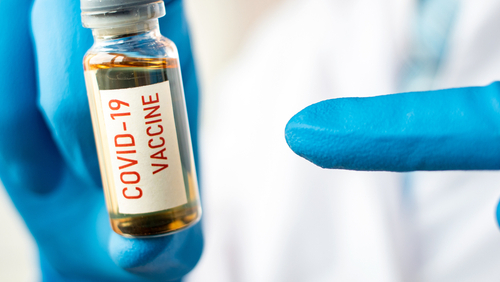 While the pandemic is not over, we do have some good news. There are vaccines and they will be available soon. Here’s where we are in terms of an overall plan and where states are with distributing the vaccines.

